-
Email Us
info@stfxonline.com -
General Enquiry
+91 033 2335 0584/9108 -
Admission Enquiry
+91 93300 82228
Email Us
info@stfxonline.comGeneral Enquiry
+91 033 2335 0584/9108Admission Enquiry
+91 93300 82228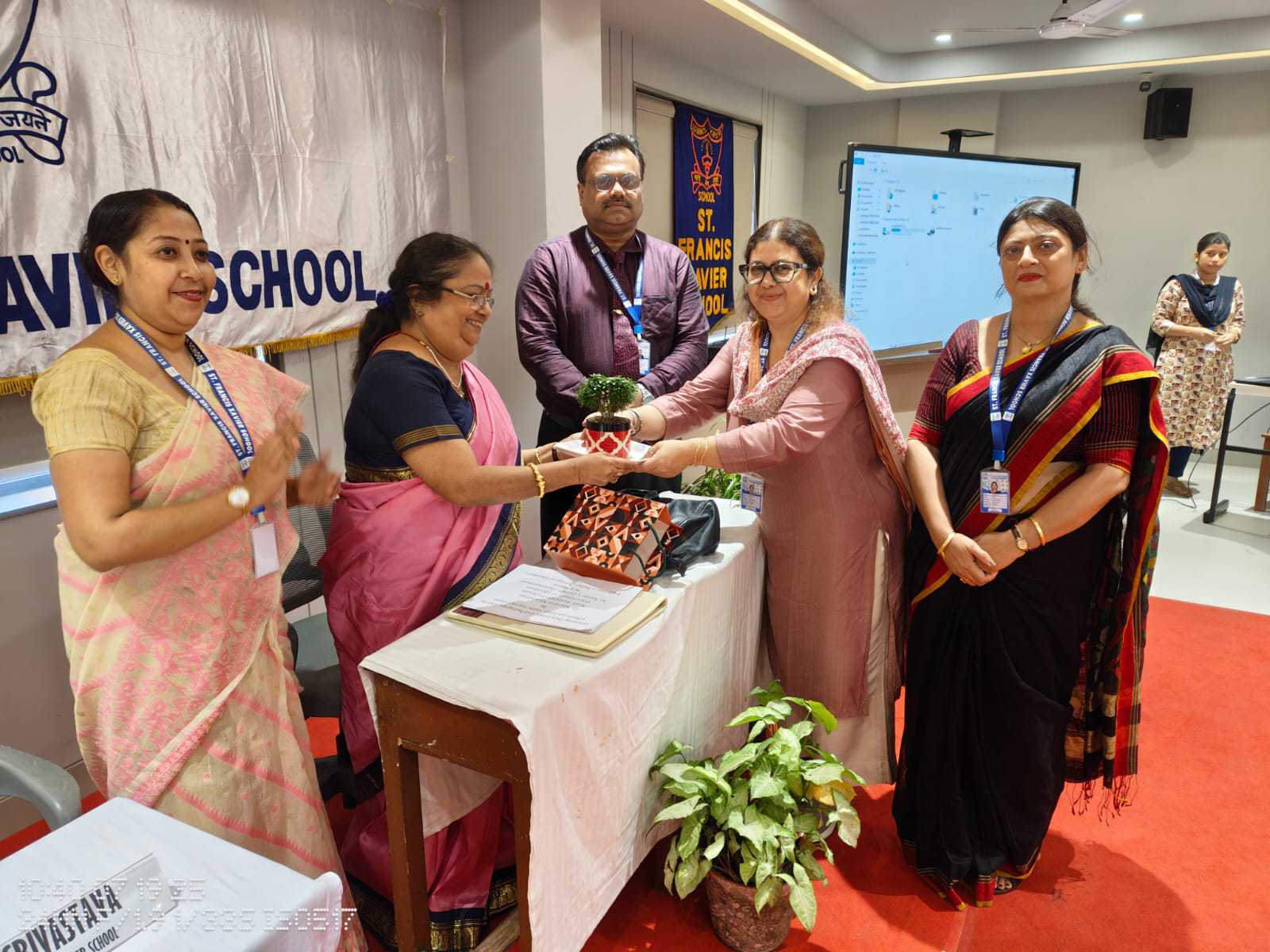
July 30th, 2025
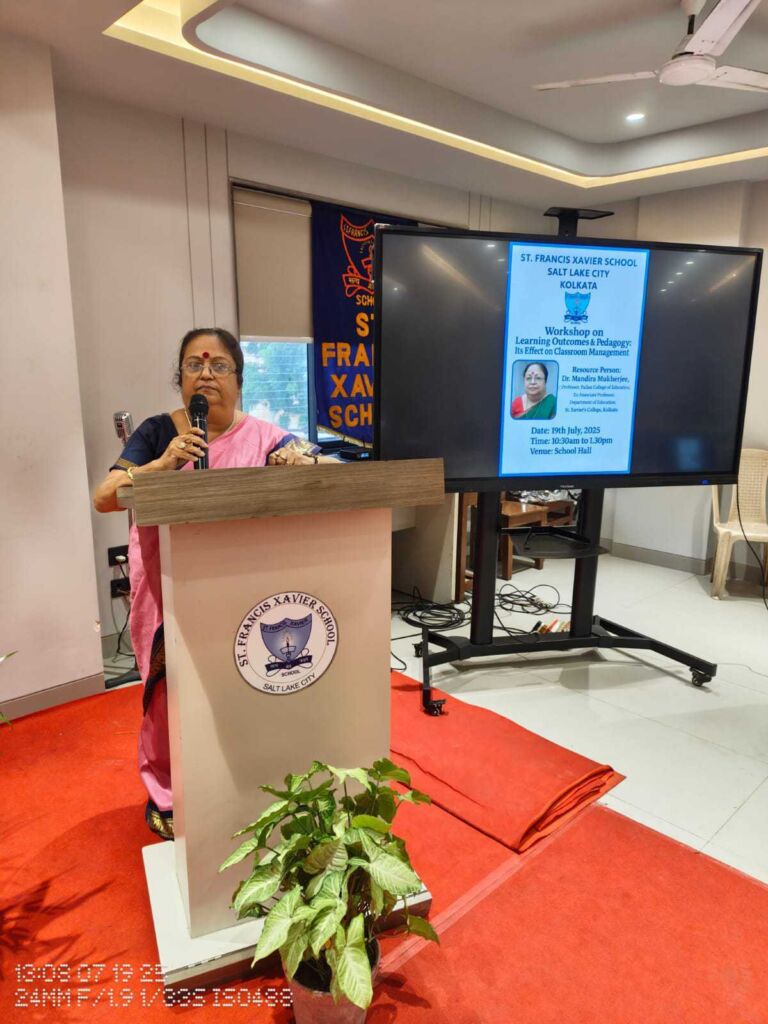
At St. Francis Xavier School, we truly believe that behind every good teacher is a curious learner—someone who is always open to growing, evolving, and exploring better ways to connect with students. Staying true to this belief, our teachers recently took part in an insightful workshop by Dr. Mandira Mandira Mukherjee, Retired Associate Professor from the Department of Education, St. Xavier’s College (Autonomous), and currently a Professor at Pailan College of Education who enlightened us on the learning outcomes and pedagogy and its effects on classroom management, which urged everyone to discern the present education system and design their teaching strategies accordingly.
In today’s digital era when everything is machine oriented, classroom teaching still remains an art. In order to ensure accuracy and productiveness, understanding the five Ps of pedagogy – Purpose, Process, Place, Pedagogical Affordance and Product is the need of the hour. We explored how teaching methods could be flexible, inclusive, and tailored to meet varied learning styles—from imitation and observation to reflection and experimentation.
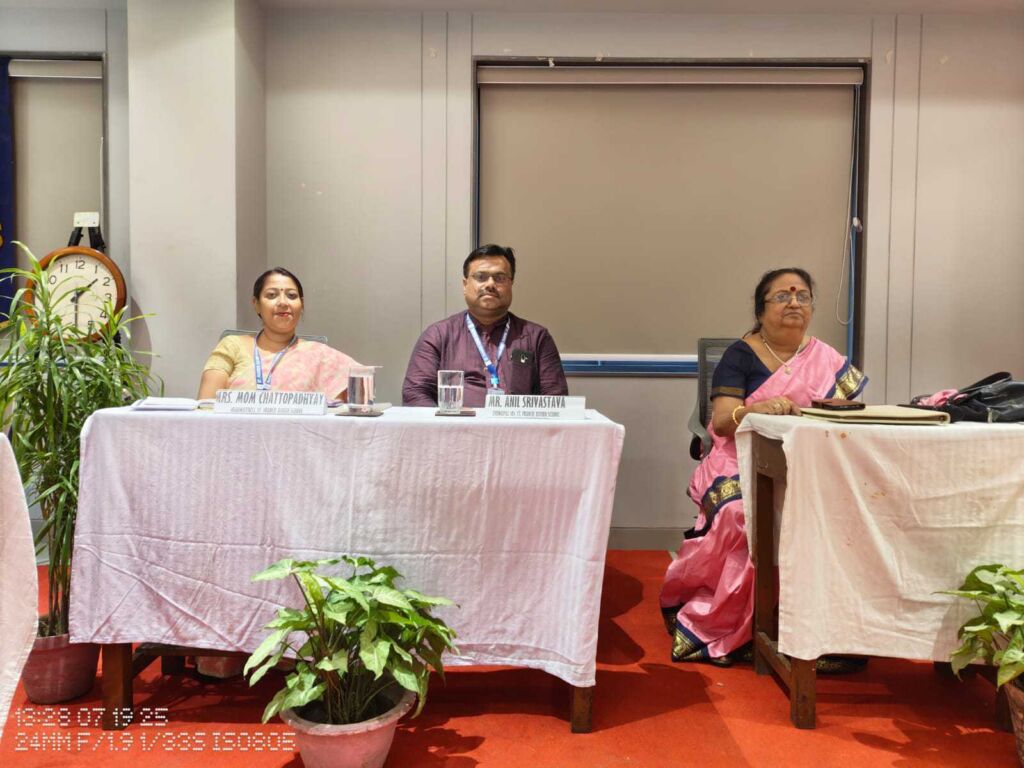
A significant challenge that teachers have always faced is classroom management. In order to ensure effective teaching and learning, the five Rs – Rights, Responsibilities, Rules, Routines, and Relationships play a huge role in creating a well-managed, learner-friendly classroom. From understanding the diverse needs of students to designing customized and structured lessons, the session covered areas that compelled us to reflect on our teaching styles.
One of the biggest takeaways? That good classroom management isn’t just about discipline—it is about clarity, connection, and making sure students go beyond what to why. Educators like Dewey and Crow and Crow remind us that learning is diverse, a transformative process, and to learn truly is to break the academic confinements and seep into behavioural, emotional, and social domains. Sometimes, a workshop like this is just what we need to step back, reflect, and return to our classrooms with fresh energy and a clearer sense of purpose.
Applying the learnings in the classroom can be done by clearly communicating the objectives at the start of each lesson to ensure transparency in learning, using diverse teaching strategies to accommodate the learning styles of all students, set up a structured routine and foster positive relationships in the classroom, and last but not least, incorporating active learning techniques to promote critical thinking and practical application. Children’s attitude towards learning is being reshaped by the digital era. Their span of attention is reducing at an alarmingly high rate due to which adapting to their style is crucial to ensure productivity.
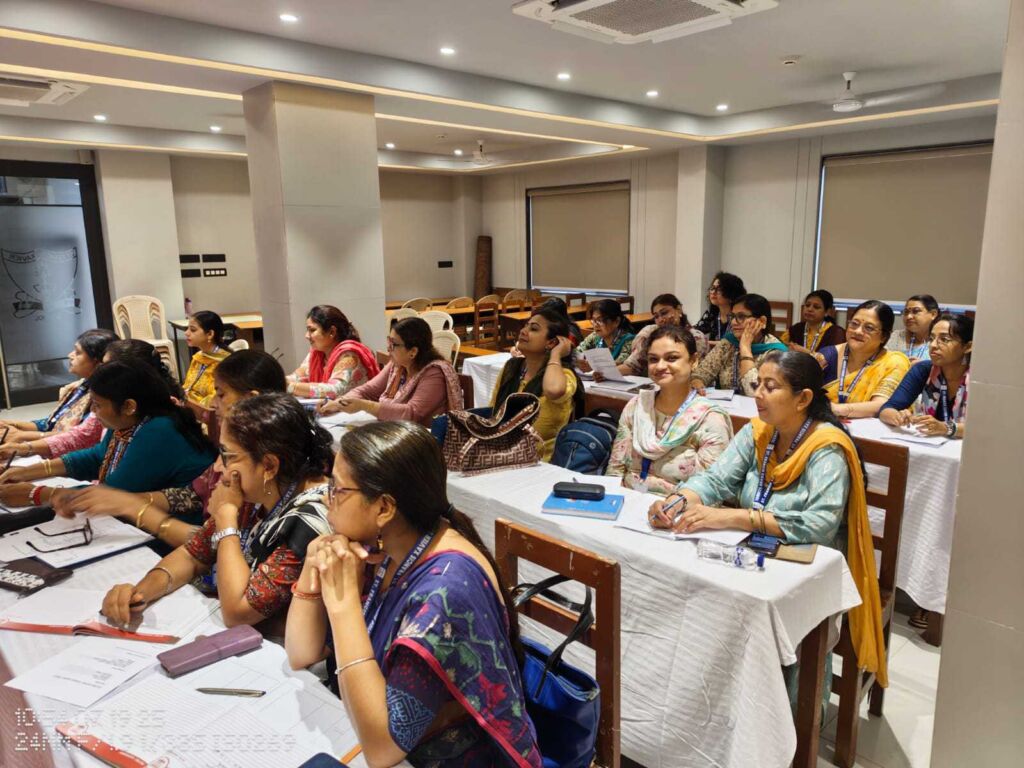
Our group discussion and presentation comprised some burning issues that every teacher should recognize to contribute to the holistic development of children. The activity-oriented workshop provided a model for collaborative learning in classrooms thereby promulgating team spirit.
Workshops like these remind us that education is an ever-evolving journey. As educators, we must continuously adapt, reflect, and refine our approach to meet the needs of our learners. This session was a powerful reminder of why we teach—not just to inform, but to transform. Let us continue building classrooms where curiosity is nurtured, respect is mutual, and learning is lifelong.